Split Boat Tours
Split Boat Trips to Islands
Tours & tickets

Split Boat Trips to Islands

Speedboat routes through the Dalmatian archipelago, limestone caves and swimming bays

Hand-picked by our editors — only the best 5 excursions from 18 reviewed.

Free cancellation Instant confirmation Mobile voucher Verified partner Skip-the-line
Tickets

Choose your ticket

Verified partners for every tour, free cancellation where available, and instant confirmation on every booking.

Five-Island Speedboat Adventure: Blue Cave, Vis & Hvar 11 hr
Guided Experience

Five-Island Speedboat Adventure: Blue Cave, Vis & Hvar

★ 4.6 (8162)
€100
per person
Instant Mobile voucher Flexible — change up to 24h

Cruise Croatia's coastline by speedboat, exploring hidden coves, luminous caves, and historic islands

Reserve
Blue Lagoon & Three Islands Speedboat Adventure 5 hr
Standard Entry

Blue Lagoon & Three Islands Speedboat Adventure

★ 4.8 (4845)
€56
per person
Instant Mobile voucher Flexible — change up to 24h

Race across the Adriatic to Trogir's medieval streets, turquoise swimming bays, and a beach club escape

Reserve

Prices from verified partners. Availability updates in real time at checkout. Free cancellation policies apply where shown.

Highlights

What you'll see inside the attraction

The landmarks, rooms, and views travelers on this tour remember — all visible on a single visit.

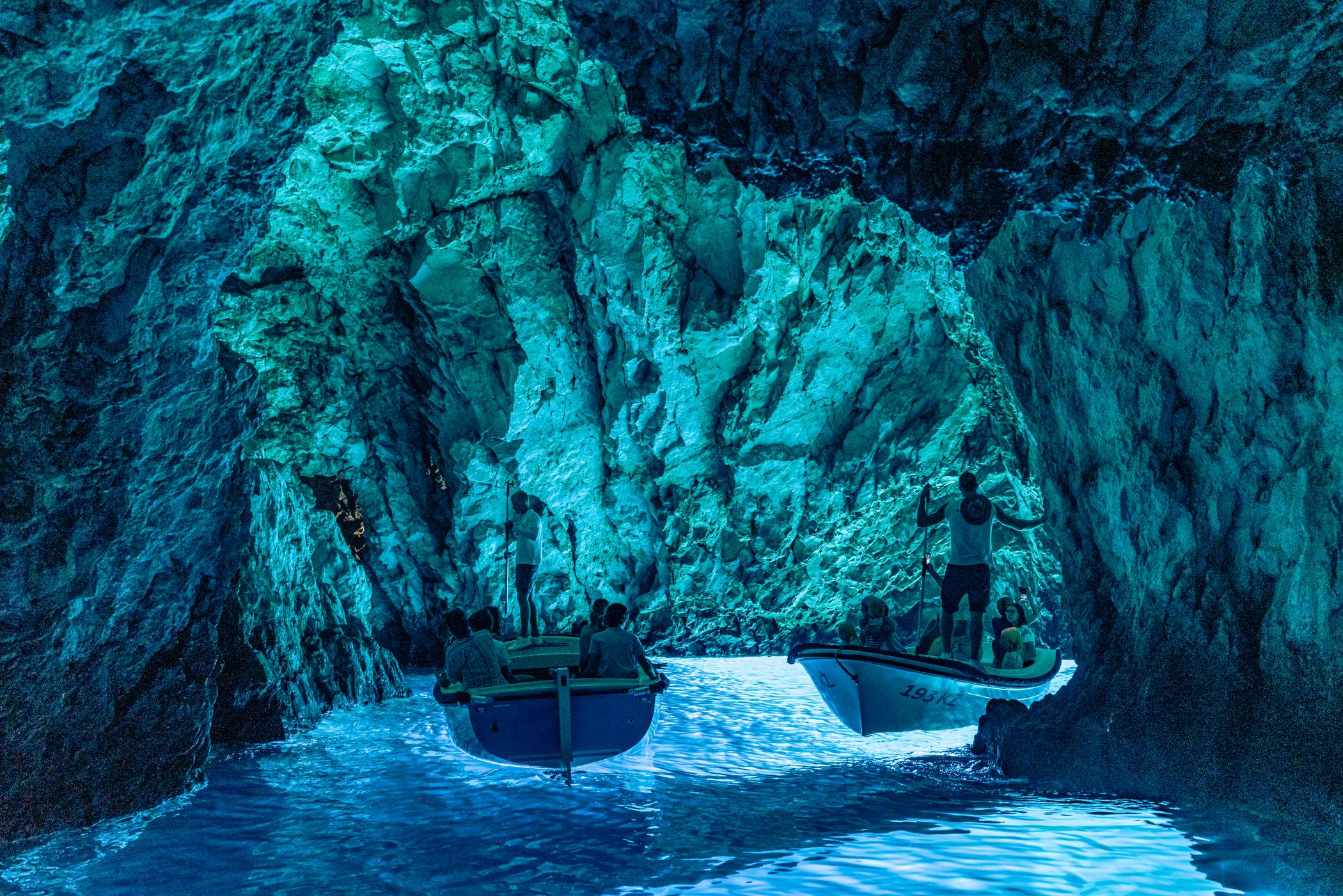
Blue Cave

A natural sea grotto famous for its glowing blue light reflection created by the sun

Glowing blue water in sea cave

Blue Cave island tour

Pakleni Islands

A chain of wooded islands offering secluded swimming spots and crystal-clear bays

Sun-drenched Mediterranean island coastline

Pakleni Islands Croatia

Stiniva Cove

A dramatic, narrow pebble beach surrounded by high cliffs accessible by boat

Narrow bay surrounded by tall cliffs

Stiniva Cove Vis

Budikovac Island

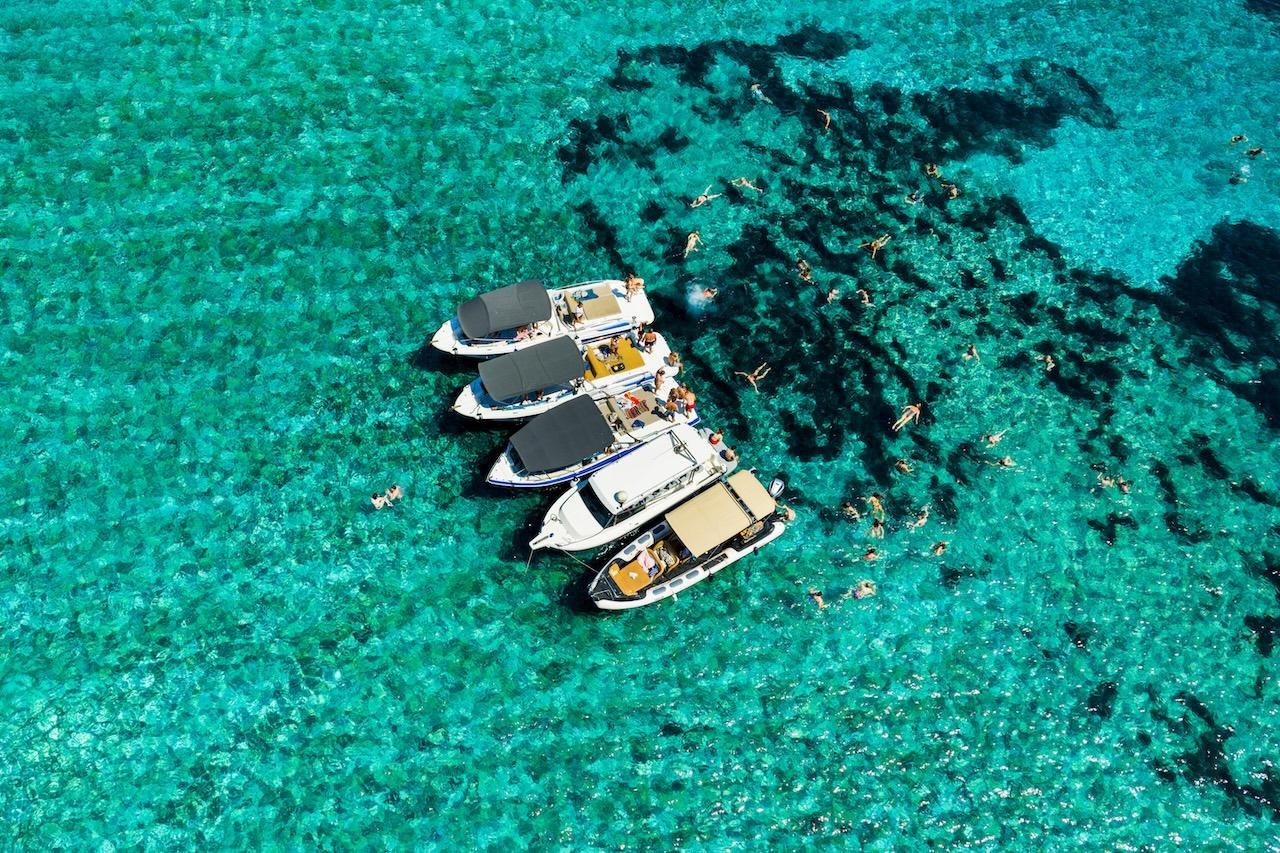
A tranquil spot known for its shallow, turquoise lagoon ideal for snorkeling

Shallow turquoise lagoon waters

Budikovac Island lagoon

Vis Town

A historic harbor town with remnants of military and ancient architecture

Old stone harbor with boats

Vis Town harbor

Head to head

Split Boat Trips to Islands Versus Local Ferry Services

Private excursions and public transit serve different travel styles; most visitors who do both find the organized split boat trips to islands provide a more curated coastal experience.

Feature Top pick Split Boat Trips to Islands Jadrolinija Ferry
Structure
Independent schedule
Flexibility
Scheduled public transport
Island Access
Port-to-port only
Duration
Variable based on route
Cost
3 EUR to 15 EUR
Group Size
Large vessel capacity

Verdict: Choose a split boat trips to islands tour for curated swimming stops, or opt for Jadrolinija for autonomous island transit and cost-effective split boat trips to islands tickets.

How your ticket works

Book your ticket in 3 steps

  1. 01

    Book online

    Choose your ticket, select your date, and reserve in under two minutes. Secure checkout handled by our verified partner.

  2. 02

    Receive your mobile voucher

    Instant confirmation by email, with a mobile voucher you can save offline. No printing, no queuing at a collection desk.

  3. 03

    Show & enter

    Arrive at the entrance, show your voucher on your phone, and walk in. Most tickets include priority or skip-the-line access.

Around your visit

Everything else worth knowing

Best time to go, insider tips, nearby landmarks, and the cancellation fine print — flip through to skim what matters to you.

Best time to visit

How crowds, weather, and events shift across the year.

Spring

May and June offer pleasant temperatures and blooming Mediterranean flora. Waters are crisp, and crowds are manageable for split boat trips to islands excursions.

Summer

July and August feature intense heat and high demand for maritime transit. Early morning departures are critical to avoid peak sun.

Autumn

September provides warm, clear waters and fewer crowds than summer. This is often considered the best time for peaceful island visits.

October

Early October can offer calm seas, but services may begin to reduce frequency as the season winds down.

Helpful tips for your visit

Small details that turn a good visit into a great one.

Check the weather

Check maritime forecasts before booking split boat trips to islands to ensure calm seas.

Prioritize mornings

Adhere to the 08:00–12:00 arrival window to enjoy the clearest water and fewer crowds.

Bring cash

Smaller island vendors often do not accept credit cards for food or incidentals.

Protect your tech

Use a dry bag for electronics, even on large boats, to prevent damage from salt spray.

Stay hydrated

The Mediterranean sun is strong; carry extra water during island hikes.

Nearby landmarks

Non-bookable sights within a short walk — free to visit, easy to pair.

Diocletian's Palace

5 min

Ancient Roman ruins forming the heart of the historic center.

Cathedral of Saint Domnius

7 min

The city's oldest cathedral with an iconic bell tower.

Marjan Hill

15 min

A forested park offering expansive views of the Adriatic.

Cancellation policy

Flexible, no hidden fees.

Full refunds are typically available for cancellations made at least 24 hours prior to departure. The 0 EUR entrance fee does not apply to private tour costs or transport tickets.

Where to stay

Hotels & districts near the attraction

Hand-picked options within walking distance — pick a district for vibe, or a specific hotel for convenience.

Hotel Cornaro

10 min
luxury

High-end stay near the historic district.

Central Hostel

5 min
budget

Convenient option for active travelers.

Radisson Blu

15 min
luxury

Coastal resort slightly removed from the city center.

About

The place, in context

The Split archipelago comprises more than 1,200 karst islands, of which fewer than seventy are inhabited year-round. Croatian cartographers in the 1970s catalogued each fragment of limestone larger than ten square metres, and the resulting maritime cadastre remains the Adriatic's most detailed chart of submerged reefs and navigable channels. Modern island-hopping routes from Split concentrate on a western arc that includes Šolta, Brač, Hvar, Vis, and the islets between them—a corridor defined less by distance than by the depth of the Adriatic trench and the prevailing summer maestral wind. The archipelago's geology is a legacy of Cretaceous-era tectonic uplift and subsequent glacial-period sea-level changes. When the Mediterranean basin refilled twelve thousand years ago, river valleys became fjord-like channels and ridgelines became island chains. The Blue Cave on Biševo exemplifies this process: a sea-level grotto whose ceiling aperture refracts morning sunlight into a cerulean glow visible only between May and September, when the sun's angle permits horizontal penetration of the water column. Vis, the archipelago's westernmost inhabited island, served as a Yugoslav naval base until 1989, and the resulting four-decade closure preserved both its pre-industrial fishing villages and its underwater archaeological sites, including Roman amphorae fields at depths accessible to snorkelers. Split boat trips to islands depart daily from Obala kneza Domagoja, the waterfront promenade east of Diocletian's Palace, where Jadrolinija's terminal anchors the commercial ferry network. Speedboat operators occupy adjacent berths, their fibreglass hulls built for the twenty-to-thirty-knot crossings that reduce travel time to Hvar Town from two hours by ferry to forty minutes by rigid inflatable. The routes vary by operator and season: five-island circuits covering Vis, the Blue Cave, Stiniva Cove, Budikovac's Blue Lagoon, and Hvar typically span ten hours; three-island versions omit Vis and focus on the Šolta-Brač-Hvar triangle. Swimming stops are calibrated to tidal windows and anchorage regulations, and captains adjust itineraries in real time when the bora wind exceeds fifteen knots. The archipelago sustains a fishing economy that predates Diocletian's retirement to Split in 305 CE, and contemporary island populations remain tied to sardine, anchovy, and octopus yields despite the post-1990s growth of nautical tourism. Most island boat trips conclude with a Hvar Town stop, where the Venetian-era arsenal and the Renaissance loggia frame a harbour that has serviced merchant galleys, Austro-Hungarian steamships, and modern catamarans across seven centuries.

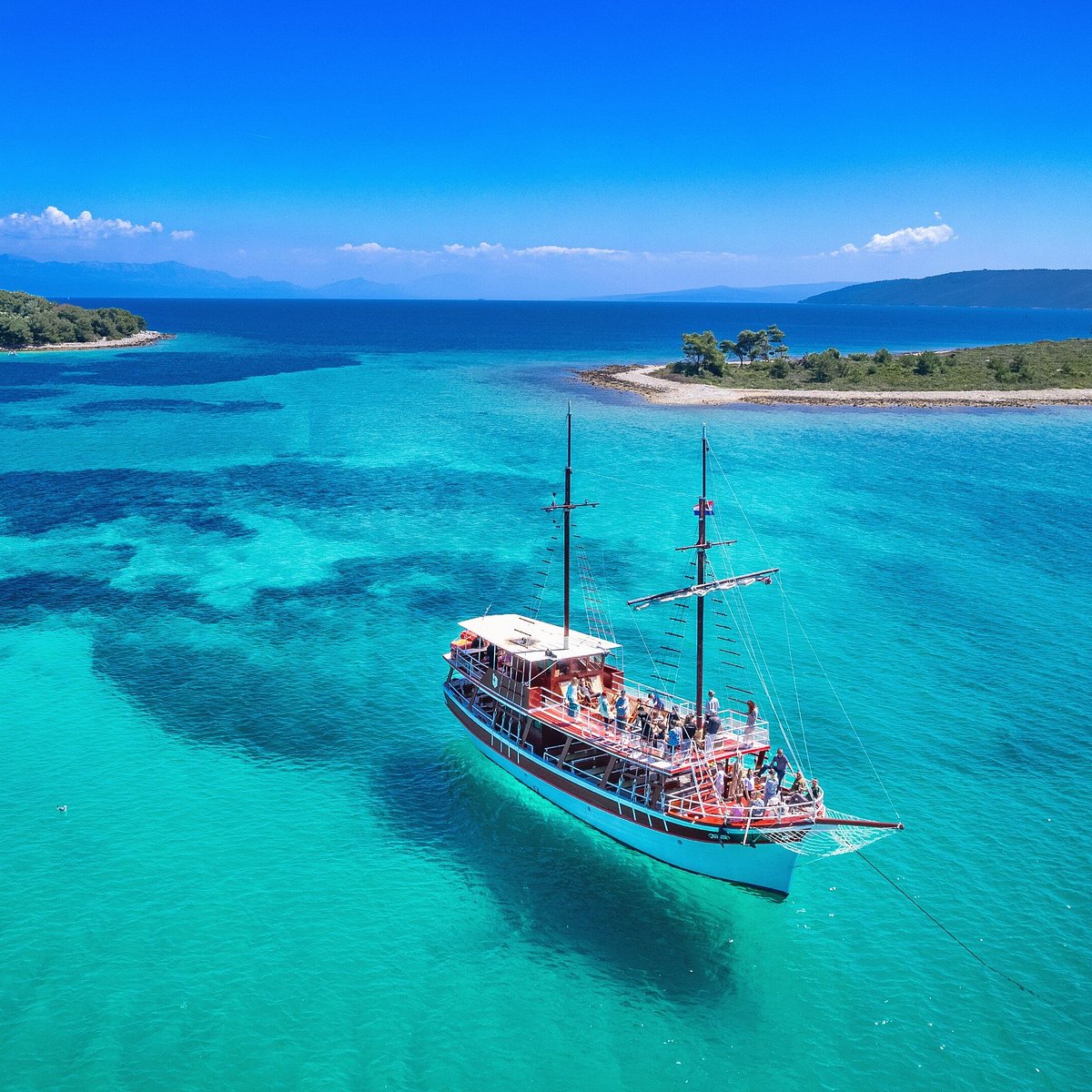
"When the Mediterranean basin refilled twelve thousand years ago, river valleys became fjord-like channels and ridgelines became island chains."
Frequently asked

Frequently asked questions about split boat trips to islands tours

Is it possible to purchase split boat trips to islands tickets on site?

It is highly recommended to secure split boat trips to islands tickets in advance through official channels to guarantee availability.

Is photography allowed during my visit?

Photography is permitted throughout the duration of your excursion, capturing both the landmarks and the seascape.

What should I pack for these coastal boat trips?

Be sure to bring sunscreen, swimwear, water, and comfortable footwear for the rocky island terrain.

Is there a cancellation policy for island tour bookings?

Full refunds are generally available if you cancel your booking at least 24 hours before your scheduled departure.